Why Paper Holds a Fold: A Pocket Guide to Creases
Why paper holds a fold depends on how bending reshapes its fibers. Learn to make cleaner creases, choose a simple tool, and spot trouble before it spreads.
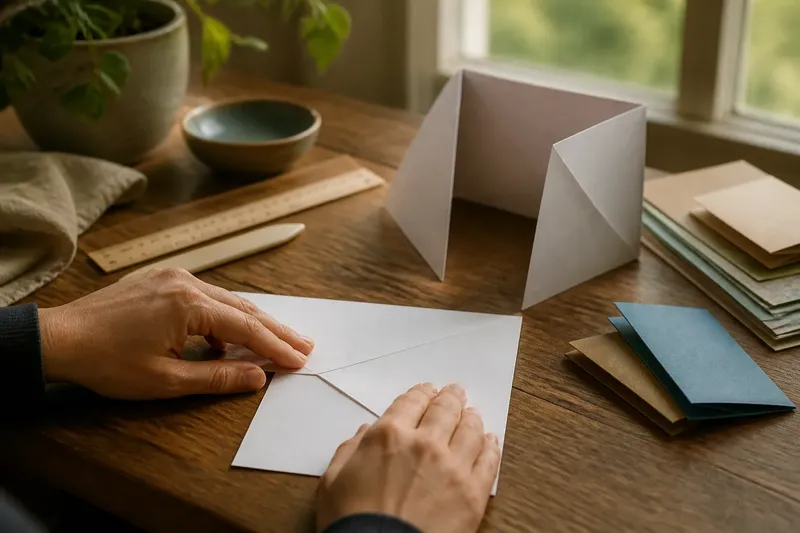
The most common folding mistake is pressing before the edges meet; the result can be a crooked crease that stays visible after you unfold the sheet. Why paper holds a fold comes down to what bending and pressure do to its fibers. Line up the paper first, then let a light crease show you where the fold wants to go.
What a crease changes
Paper is a web of fibers. Bending gathers them on the inside of a curve and stretches them on the outside. A crease flattens that curve into a narrow track, so the sheet tends to bend there again.
That track is not a separate hinge. It is a reshaped area of the sheet, which is why opening and closing a fold can eventually fray or split it. A clean crease holds its shape better than one crushed with repeated, heavy rubbing.
Paper grain is the direction in which many of its fibers tend to run. A fold across the grain can feel stiffer or leave a rough line, especially in thicker stock. If you have a spare piece from the same sheet, make a small fold in each direction and compare how smoothly the paper bends. Choose the direction that suits the finish you want.
When edges slip
A long, sweeping fold gives the paper plenty of chances to shift. Even a small slide at one corner can leave the far edge visibly uneven.
Bring one corner toward its partner and pause. Keep the meeting point lightly pinched while you check the opposite corners and the midpoint. If the edges bow or buckle, loosen your hold and reposition the sheet before creasing it.
Say you have a standard sheet of printer paper and want to fold it into a note. Bring the top corners together, hold one corner in place, and lower the edge without dragging it across the page. Check the other corners and the center; if they line up, press from the middle toward each end. The expected result is a straighter fold, though an unevenly cut sheet may still leave a small mismatch.
When lines wander
A crease can drift if a fingertip pushes the top layer sideways or the sheet turns on the table. Keep the paper on a flat, clean surface. Once the edges line up, hold a folded corner still and make a light mark at the center.
Pause and check the line. If it follows the intended path, smooth it toward one end, then the other. If it veers off, stop before pressing harder. Open the sheet and decide whether a faint mark can be hidden by the project; a deep crease will usually remain visible, so a fresh sheet may give a cleaner result.
Rough paper edges
A pale, rough line or tiny splits can mean the fold is working against the grain, the paper is too thick for a tight bend, or the pressure is too forceful. Coated paper and cardstock may resist a sharp fold more than ordinary printer paper.
Let resistant paper bend gradually, and avoid repeatedly opening and closing the same crease. If the sheet is thick, a broader bend may look better than a narrow, crushed one. For a specific paper stock, check the maker’s handling advice when it is available; a method that suits notebook paper may mark glossy cardstock.
Simple crease tools
For an everyday fold, a clean fingertip is often enough. Use the soft pad rather than a nail, and make a controlled pass along the crease. Keep your hand dry so you do not leave marks.
A clean, blunt ruler edge can help on sturdy paper. Use light pressure and avoid dragging it across a delicate or coated surface. The tool matters less than even contact along the fold. Repeated burnishing is not worth the effort: it can scuff or flatten the surface without correcting a crooked line.
Questions about creases?
Why does a crease stay visible?
Pressure reshapes the fibers along the bend, so the paper tends to fold there again. A firm crease may remain visible even after you open the sheet.
Should I fold with the grain?
A fold with the grain often feels smoother, especially in thicker paper. If the direction is unclear, compare small folds on spare pieces of the same stock.
Can I fix a misplaced crease?
You can open the sheet and make a new fold, but the original line may still show. Choose the cleaner line and avoid pressing both folds deeply.
What can replace a bone folder?
A fingertip works for many ordinary folds. On sturdy paper, a clean, blunt ruler edge can help if you keep the pressure light.
A better folding choice
When a fold looks wrong, pause and identify what you can see: mismatched edges point to alignment, a slipping sheet calls for a steadier hold, and a rough line may mean the stock is resisting the bend. Change one thing at a time. That is the useful part of understanding why paper holds a fold: the first light crease gives you a chance to correct the path before it becomes the mark you keep.